

Make It Pitchy
How to write a memorable pitch

Today’s newsletter is an excerpt from a brand new course I created called Query Confidence.

Querying is an emotional roller coaster, and also, a giant mystery. While I can’t promise you an agent or a book deal (because no one can!), you’ll step into querying knowing that you’ve put your best foot forward.
In this self-paced course, you’ll learn techniques to polish your manuscript, develop your pitch package, and create your pitch strategy. The best part? You can reuse these tools for any manuscript you write and query!
It costs $25 for lifetime access.
Make it Pitchy
The bulk of your query letter should be taken up by your pitch. Think of the pitch as being like the blurb on the back of a book (also called the jacket copy). The job of this blurb is to give the reader a clear idea of what the story is about, and entice them to want to know more. This is a different job from your synopsis, which is supposed to reveal the entire story.
Here is what an agent should be able to identify from your pitch:
Who is the main character
What the main character wants
What obstacles are keeping the main character from this goal
What the main character stands to lose if they do not succeed
A hint of how the conflict escalates over the course of the book
A hint at how your main character will change as a result of the book
Start by jotting down the answers to each of these components. Now that you have the basic information identified, the next step is to make it sound pitchy. The best way to learn how to do that: imitation!
Look up books that are comparable to yours and read their jacket copies. Choose 3 in a variety of structures, and imitate the structure of each one, plugging in the relevant details from your book. Get a feedback partner to weigh in on which version works best. Feel free to borrow snazzy sentences from the two you won’t be using. Get another round of feedback and you’ll be ready to insert your pitch into the rest of your query.
Dissecting Book Jackets
Here are some examples to get you started. In each example, I have started with the jacket copy for the sample book from Goodreads. I then briefly explain why each one works, followed by some thoughts about what might be added/ changed if this appeared in a pitch instead of on the back of a published book.
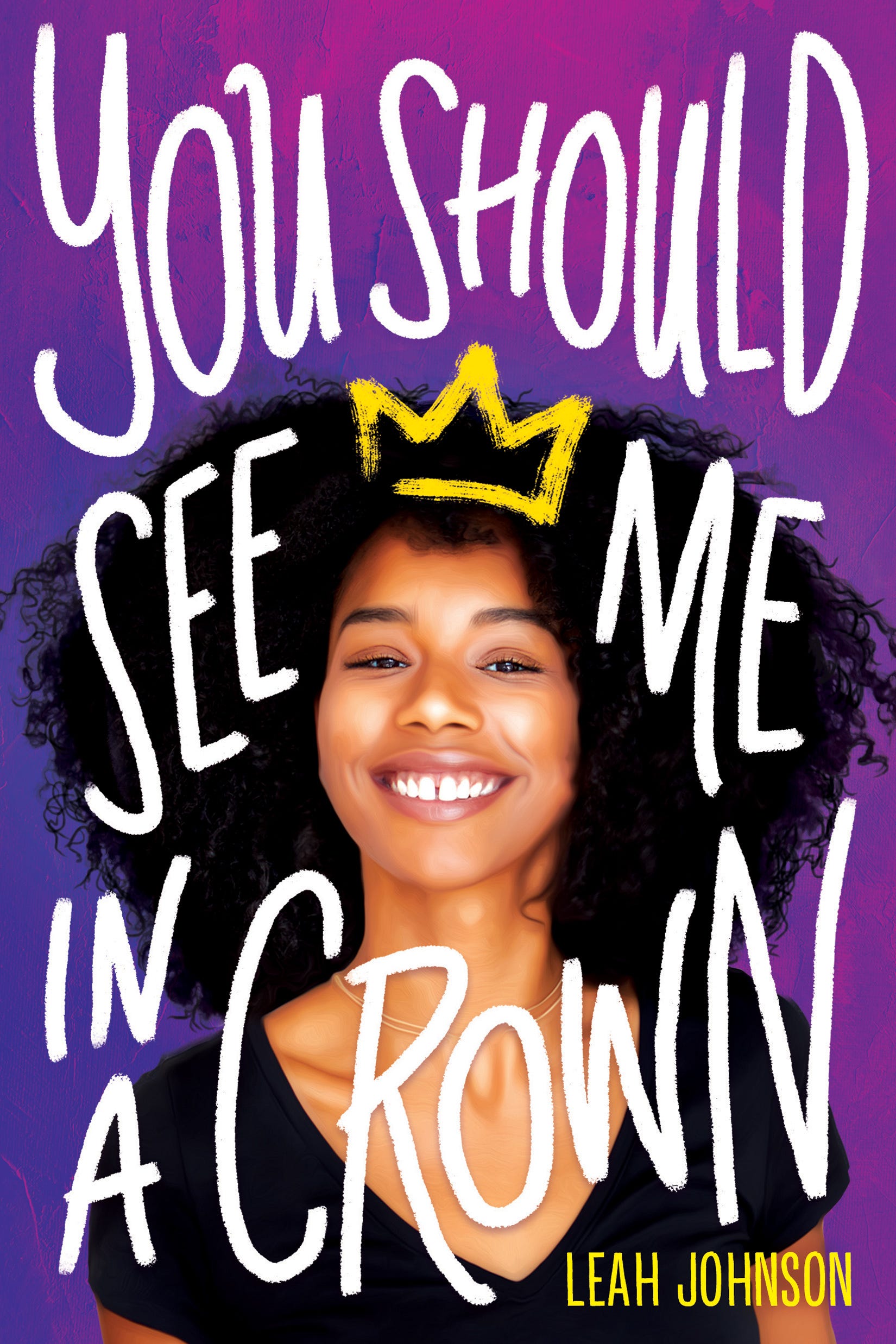
You Should See Me in a Crown by Leah Johnson
Liz Lighty has always believed she’s too black, too poor, too awkward to shine in her small, rich, prom-obsessed midwestern town. But it’s okay -- Liz has a plan that will get her out of Campbell, Indiana, forever: attend the uber-elite Pennington College, play in their world-famous orchestra, and become a doctor.
But when the financial aid she was counting on unexpectedly falls through, Liz’s plans come crashing down . . . until she’s reminded of her school’s scholarship for prom king and queen. There’s nothing Liz wants to do less than endure a gauntlet of social media trolls, catty competitors, and humiliating public events, but despite her devastating fear of the spotlight she’s willing to do whatever it takes to get to Pennington.
The only thing that makes it halfway bearable is the new girl in school, Mack. She’s smart, funny, and just as much of an outsider as Liz. But Mack is also in the running for queen. Will falling for the competition keep Liz from her dreams . . . or make them come true?
Why it works:
It’s only 171 words!
In the first sentence, we learn what Liz misbelieves about herself and her place in the world.
In the second sentence, we learn what Liz wants and why she wants it.
In the third sentence we learn of the conflict (no financial aid) and the solution that Liz is going to spend the book pursuing (Prom Queen).
In the fourth sentence, we learn that Liz is going to endure a series of trials that will challenge her misbelief in pursuit of her goal.
In the final paragraph, we learn of a complication, and get a teaser that this complication might change the way Liz sees herself, therefore telegraphing her character arc, without spoiling it. (In the synopsis, you’d include the resolution, but you don’t need to do that in the query or pitch.)
While it isn’t included here, if this was a pitch, the author might include something like, “This coming-of-age story features a protagonist who learns to take up space and embrace her authentic identity.” That’s also a good way to include some reference to the character arc within the pitch.
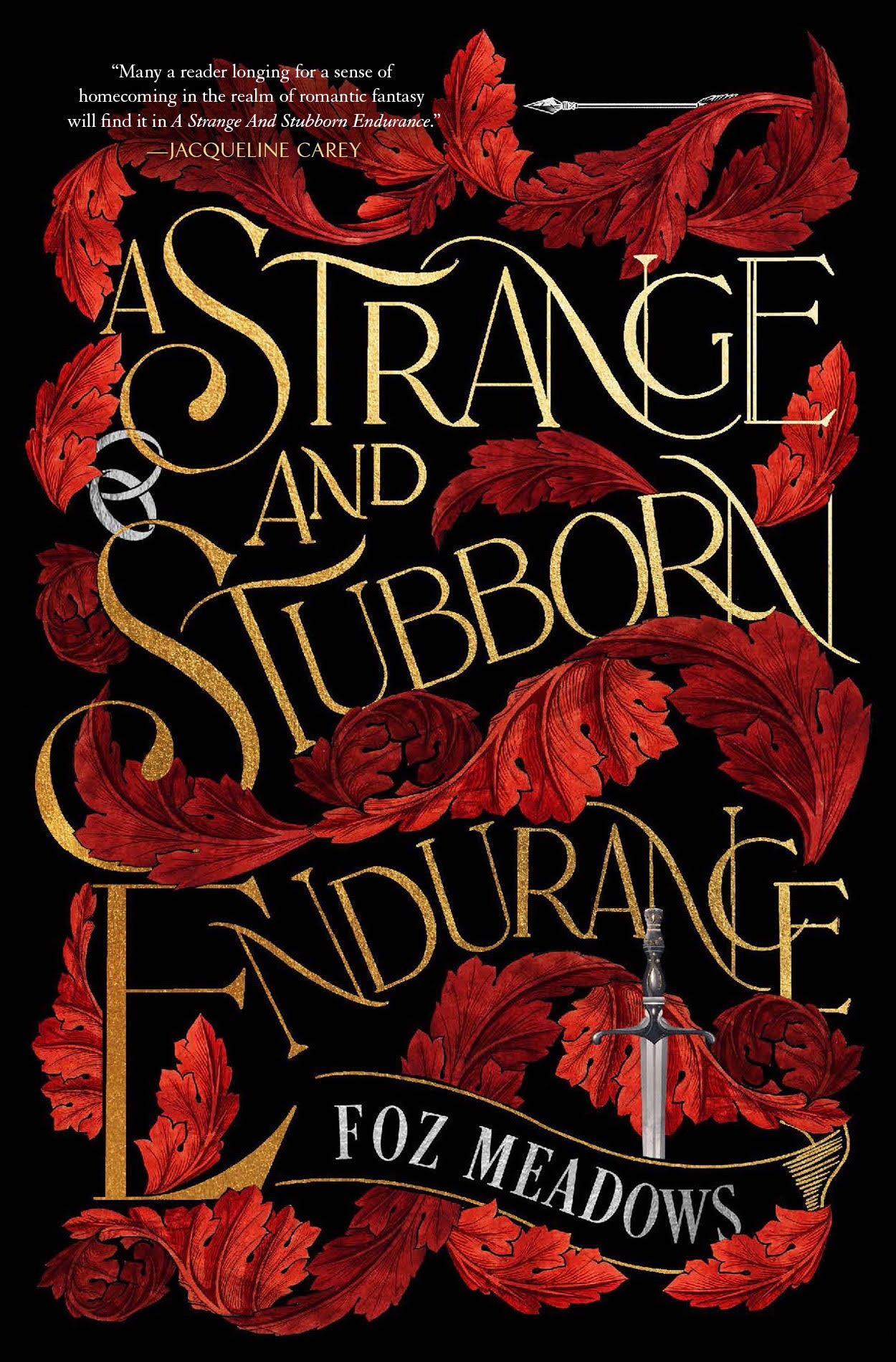
A Strange and Stubborn Endurance by Foz Meadows
Velasin vin Aaro never planned to marry at all, let alone a girl from neighboring Tithena. When an ugly confrontation reveals his preference for men, Vel fears he’s ruined the diplomatic union before it can even begin. But while his family is ready to disown him, the Tithenai envoy has a different plans: for Vel to marry his former intended’s brother instead.
Caethari Aeduria always knew he might end up in a political marriage, but his sudden betrothal to a man from Ralia, where such relationships are forbidden, comes as a shock.
With an unknown faction willing to kill to end their new alliance, Vel and Cae have no choice but to trust each other. Survival is one thing, but love―as both will learn―is quite another.
Byzantine politics, lush sexual energy, and a queer love story that is by turns sweet and sultry, Foz Meadows’ A Strange and Stubborn Endurance is an exploration of gender, identity, and self-worth. It is a book that will live in your heart long after you turn the last page.
Why it works:
Word count: 175 words
This is a good example of writing a dual POV pitch. We start with Vel, because his initial goal/ conflict sets the stage for the rest of the story. In the first paragraph, we learn Vel’s problem, and the unexpected solution that causes his path to cross with Cae’s.
We get one sentence about how the plot affects Cae, and then another sentence establishing how Cae and Vel have a plot adhesive (the murderous unknown faction) that will bring them together. This sentence also makes it clear that this story is primarily a romance by highlighting how the plot relates to the two men falling in love with each other.
The last paragraph speaks more broadly about the themes and vibes in the book. You can definitely include something like this in the pitch, and it would be a great place to identify your comp titles.
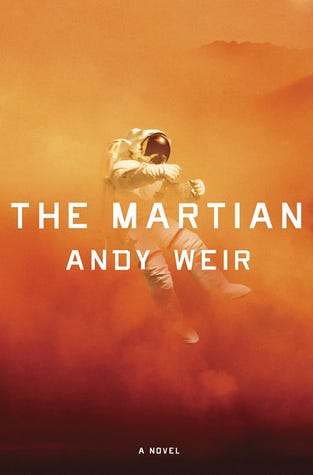
Six days ago, astronaut Mark Watney became one of the first people to walk on Mars.
Now, he’s sure he’ll be the first person to die there.
After a dust storm nearly kills him and forces his crew to evacuate while thinking him dead, Mark finds himself stranded and completely alone with no way to even signal Earth that he’s alive—and even if he could get word out, his supplies would be gone long before a rescue could arrive.
Chances are, though, he won’t have time to starve to death. The damaged machinery, unforgiving environment, or plain-old “human error” are much more likely to kill him first.
But Mark isn’t ready to give up yet. Drawing on his ingenuity, his engineering skills — and a relentless, dogged refusal to quit — he steadfastly confronts one seemingly insurmountable obstacle after the next. Will his resourcefulness be enough to overcome the impossible odds against him?
Why it works:
Word count: 151 words
The first sentence makes it clear this is science fiction.
The second sentence tells us there are some high stakes!
The author quickly summarizes the specific obstacles that stand in the way of Mark’s survival
We also learn of Mark’s skills/ personality traits that make him up for the challenge of surviving on Mars
I’ve heard many agents say they don’t love a rhetorical question. In this case, I think it works, but this could be replaced with a statement that introduces a ticking clock. E.g. Despite his resourcefulness, there is only so much Mark can do in the face of such impossible odds, and in X time/ after Y obstacle, his luck could run out.
Want more help developing your query?
For fill-in-the-blank query templates, techniques for writing a (mostly painless) synopsis, and a spreadsheet to help your organize your agent research, head over to Query Confidence. You don’t need to face the query trenches alone!